On Excellence
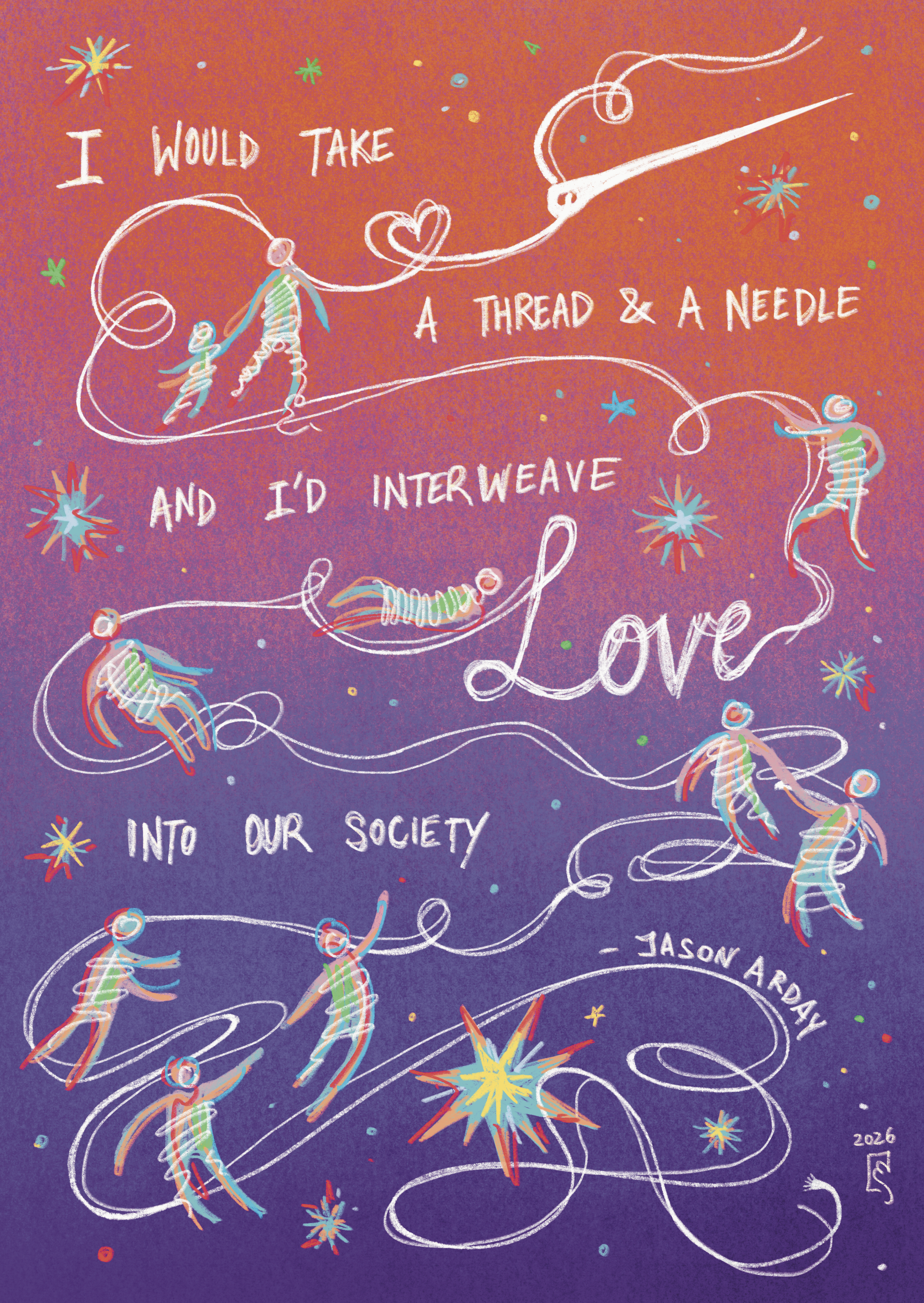
Poster with quote from Prof. Jason Arday. Free to download, not for resale.
Professor Jason Arday died in August at 41 years old, and his story has sat heavily with me all month. I suspect that there are a number of us who grew up understanding, even though no one told us directly, that we needed to be twice as good to be allowed half as much, to even get our foot through the door before getting a seat at the table.
If you don’t know his story, Jason Arday was a sociologist who studied race and inequality in education. By his own account, he was autistic, didn’t speak until he was eleven, and overcame illiteracy in his late teens. In 2023, at 37, he became the youngest Black professor in Cambridge’s history. He chose to spend his life studying why children like him get left behind.
I don’t know the full truth of what happened to him, and I don’t pretend to. It’s not what this note is about. What I keep mulling over is the shape of this story, and how, despite the difference in the colour of our skin, our backgrounds, and the routes we’ve taken, his story is still familiar.
There’s a set of unspoken instructions and rules to be a minority (non-white) in the UK, and most of us learn to follow them before we even recognise them or know how to talk about them. As someone who didn’t grow up here but had the privilege to be able to masquerade (however poorly) as one, I had to learn them pretty quickly. Excellence is what gets you through the door, instead of being the achievement, while mediocrity — to be ordinary, human, and to make mistakes that others are constantly being forgiven for — is not an option readily available. I have met friends who struggled to find a job, to find a sense of community and joy in being here, because they are simply ordinary.
And there’s nothing wrong with being ordinary. London as a city grants us anonymity in comparison to the microscope we used to live under in Hong Kong, where everyone somehow knows everyone else. At a social gathering, W mentioned, ‘Whatever you do in Hong Kong, everyone knows about it — but it becomes very small in London.’
To be ordinary, you rely on being okay with not being seen. But to be extraordinary, there is a cruel caveat: if one of us stumbles, or is even rumoured to have stumbled, the fall is never just ours. It becomes evidence and is held up as some sort of proof about all of us. Every door we walked through gets re-examined, and every achievement is audited, with a set of requirements exclusive to us, and not the white man.
For a Hong Konger, there’s an added layer to this. We were the majority in our city, and yet we functioned with the same level of scrutiny and self-deprecation as though we were not. I grew up in post-colonial Hong Kong (post-British; there’s more to be said about our colonisation by Mainland China). It is a city that spent a century and a half judged and exoticised by the West, with little pre-colonial history that modern Hong Kongers can identify with. I remember growing up competitive, seeing peers as threats to my own achievements, beating myself up harder so I could stay ahead of the curve. I remember being passed over for an inter-school swimming contest at a majority-white school because I tied with another (white) girl and thinking that I should have swum faster so there would be no contest. It wasn’t until I returned to a local, majority-Chinese school that being a ‘banana’ (whitewashed, yellow on the outside, white on the inside) became a privilege, and I was noticed for my talents. This is partly an inheritance from the Empire: excellence is the price of being taken seriously by a power that was never going to consider you its equal.
But I can’t pin it all on British colonisation (or even the American cultural influence). Chinese culture carries its own long history of meritocracy, a deep-rooted reverence for education and excellence. The expectation for excellence came from both powers that ruled over the city. My mum tried to release me from both and focused on what I was naturally good at, rather than pushing me to compete on every front. Even then, I took the safe route: I got the university degree, worked in art institutions (though I still remember my professor, upon learning about my job, called it an oddball institution), and kept a steady job while I pursued my dreams late at night. I understood that wandering was for other people, a privilege granted through race or class.
I’ve struggled with the idea of what we ‘deserve’ and have long resigned myself to the fact that the world is unfair. Working hard for a result you want is the foundation, but the cards we are dealt after are where the injustice lies. But moving to London gave me hope that maybe there’s a chance to fight against that injustice — if I didn’t ask, I wouldn’t even get the chance to dream of getting it.
Then I found out that the measuring didn’t stop, and in many ways, the requirement became harsher. The fluency and polish that made me excellent in Hong Kong didn’t buy me the same space here. Jason Arday and I inherited very different versions of this. His was heavier by far. But I recognise the root, because I grew up being part of that same status quo. Which is why the thing I keep returning to isn’t the controversy, but something he said when asked how he would change the world: “I would take a thread and a needle and I’d interweave love into our society.”
A Black, working-class, neurodivergent man who had every reason to see the world with anger answered with the notion of mending.
Rest well, Professor.